

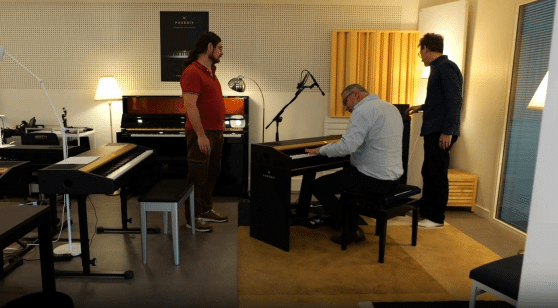
An outside perspective on an exceptional piano
During the Made in France Fair, held in Paris, the program *Voyons voir*, broadcast on BFM Lyon with support from the Auvergne-Rhône-Alpes region, visited local companies dedicated to French craftsmanship. Piano Phoenix, a digital piano manufacturer based in Vénissieux, was among the companies featured.
This report offers an immersive look into the world of Piano Phoenix and highlights a unique approach to the piano, at the intersection of technological innovation, craftsmanship, and musical emotion.
Technology designed to convey the pianist's emotion
From the very first scenes, the report highlights a major difference: the sound produced by Phoenix pianos does not come from sampled sounds, as is the case with most digital pianos. It is generated in real time, thanks to modeling technology developed by the company.
This approach makes it possible to reproduce complex acoustic phenomena, such as sympathetic resonance, which is essential to the rich sound of an acoustic piano. The goal is clear: to ensure that the musician forgets about the technology and focuses solely on the joy of playing and the performance.
A French and regional ecosystem
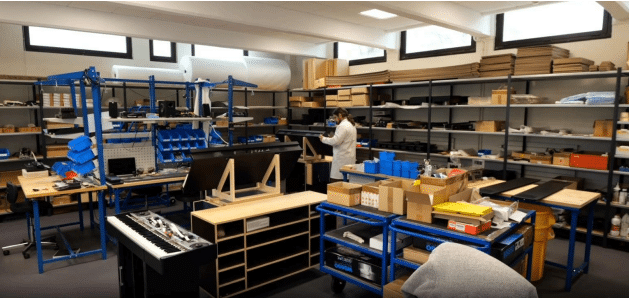
The report also highlights a key aspect of Piano Phoenix’s identity: local manufacturing. The pianos are designed and assembled in the company’s workshops in Vénissieux. Each instrument requires several hours of manual assembly, following a craft-based rather than industrial approach.
The brand relies on a network of partners, most of whom are French, with a significant number hailing from the Auvergne-Rhône-Alpes region. This choice of short supply chains fosters proximity, responsiveness, and the quality of interactions, while strengthening the project’s regional roots.
Represented under the regional pavilion at the Made in France Fair, Piano Phoenix proudly champions this “Made in France” label, which embodies both industrial and artisanal craftsmanship.
A close relationship with the musicians
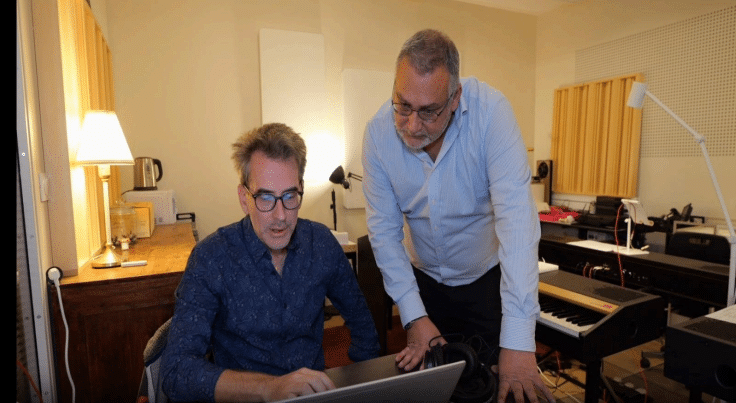
Finally, the report highlights the importance of feedback from pianists in the development of instruments. Conservatories, professional musicians, and amateurs all play an active role in the evolution of Phoenix pianos, particularly thanks to the highly precise adjustment options offered by modeling technology.
Each piano thus becomes an evolving instrument, designed to adapt to the sensibilities and requirements of each musician.
Conclusion
In this report broadcast on BFM Lyon, Piano Phoenix emerges as a unique player in French musical innovation. By combining advanced digital technology, local manufacturing, and high musical standards, the brand pursues a clear ambition: to create a lasting bridge between the worlds of acoustics and digital technology, in the service of emotion.